Basil Steers is a name which has become legendary when stories are told of the Tasmanian High Country snarers. Having first followed his father into the mountains as a 15 year old, Basil spent a lifetime eking a meagre living to supplement his farm income from the trapping of possums and wallabies for their winter coats. He was highly skilled and extremely efficient in the way he went about employing his trapping techniques. To facilitate the long, difficult months spent in the mountains, Basil also became adept at building huts for shelter – his home away from home. For over 40 years, Basil returned to his beloved high country areas conducting his snaring and trapping throughout the harsh Tasmanian winters. In 1984 the Tasmanian Government legislated to ban snaring which came as a bitter blow and a huge disappointment to Basil. He found it hard to accept that the way of life as he knew it was to come to an abrupt end.
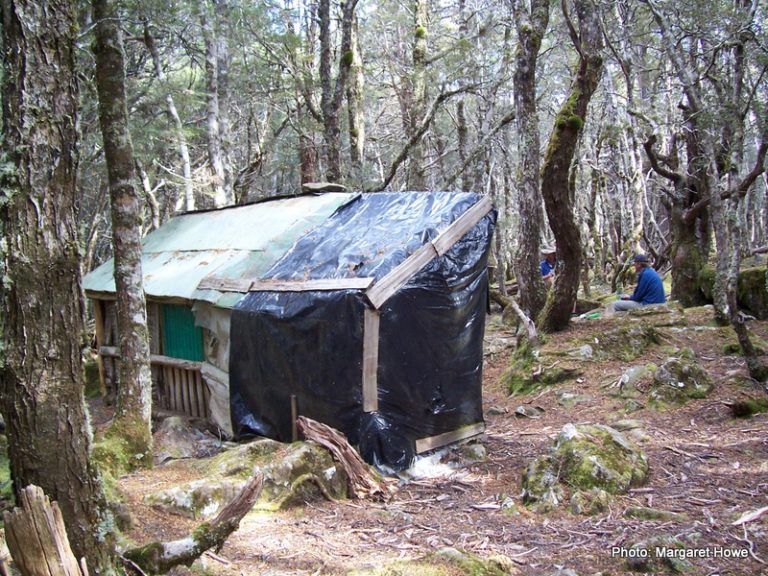
Some time after the ban (circa 1985), assisted by his son Philip and friend Tim Jetson, Basil built a secret hut where he planned to continue trapping despite the illegalities of it all. Two other huts built previously in the area had been used by Basil but they had been destroyed either by fire or the harsh elements. Located at the southern end of the February Plains, off the Arm River Track near the Wurragarra Creek and hidden deep in an ancient myrtle forest, Basil constructed a small hut which was so well concealed that, even today, it is difficult to locate. Known as the Smurf Hut it was ultimately never used for Basil’s hunting activities but was frequented by the Steers family for recreational purposes. By 1989 the area was included in the Cradle Mt-Lake St Clair National Park but the quaint little Smurf Hut still stands as a testament to Basil Steers, a true pioneer of the 20th century.