Du Cane Hut
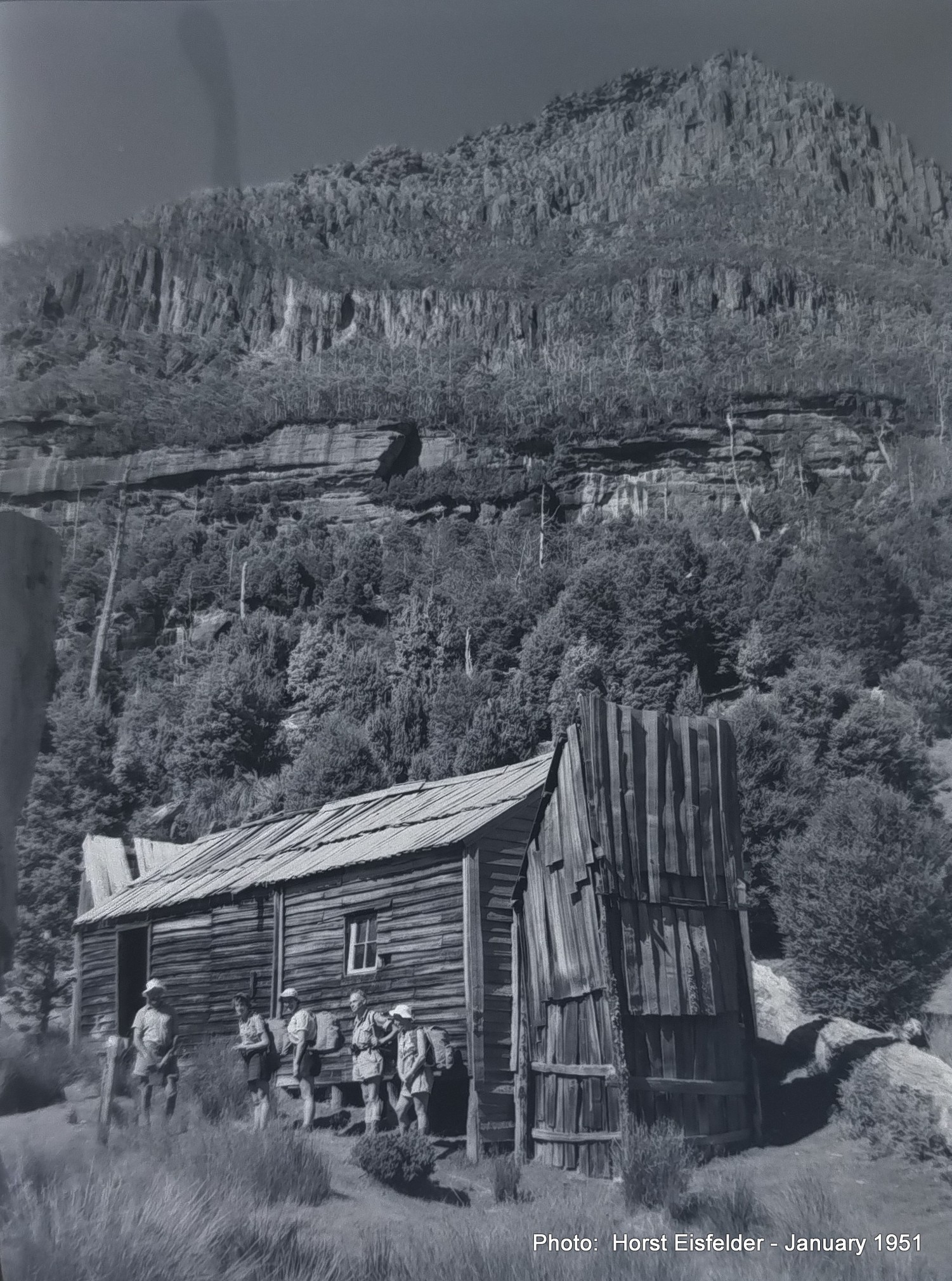
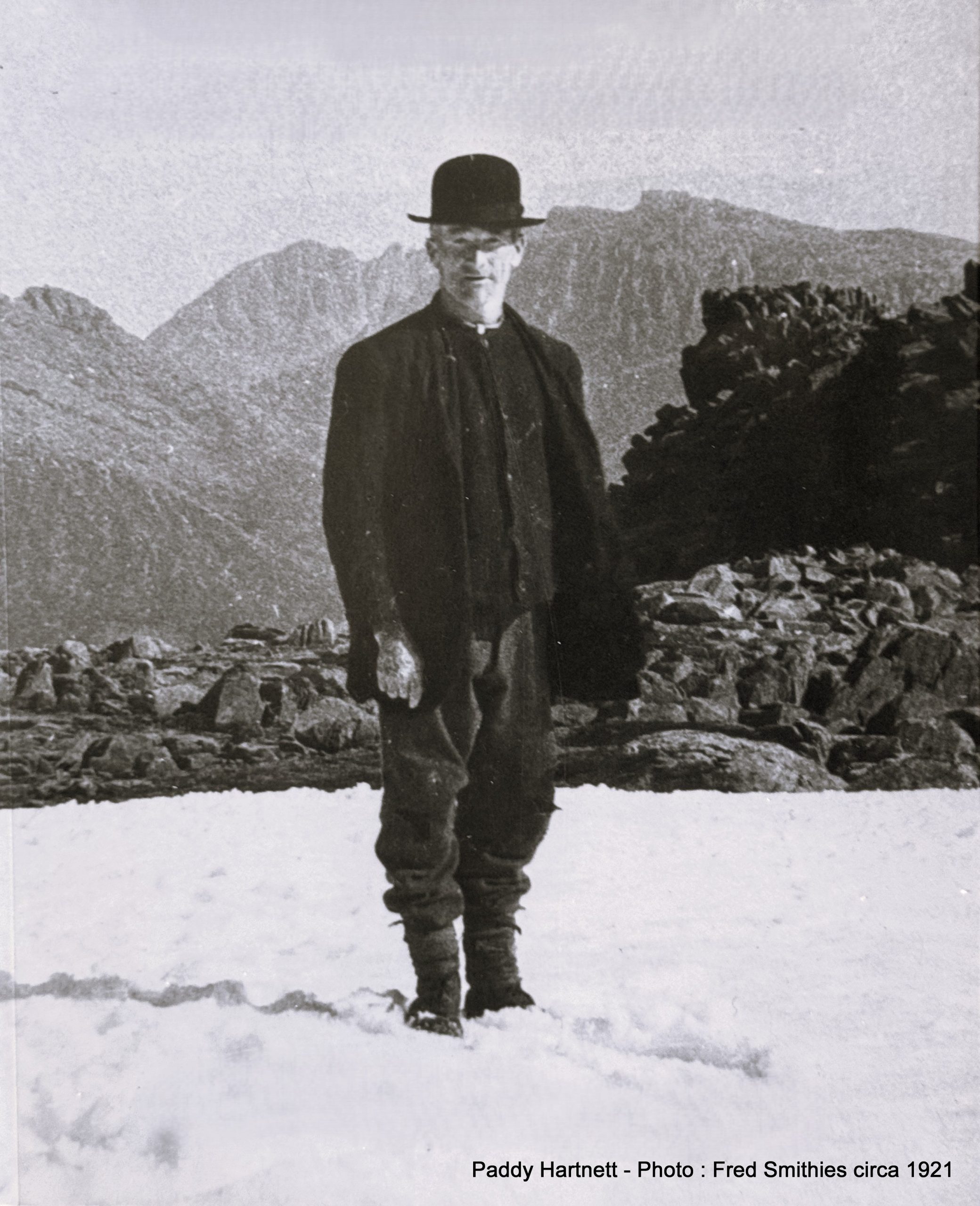
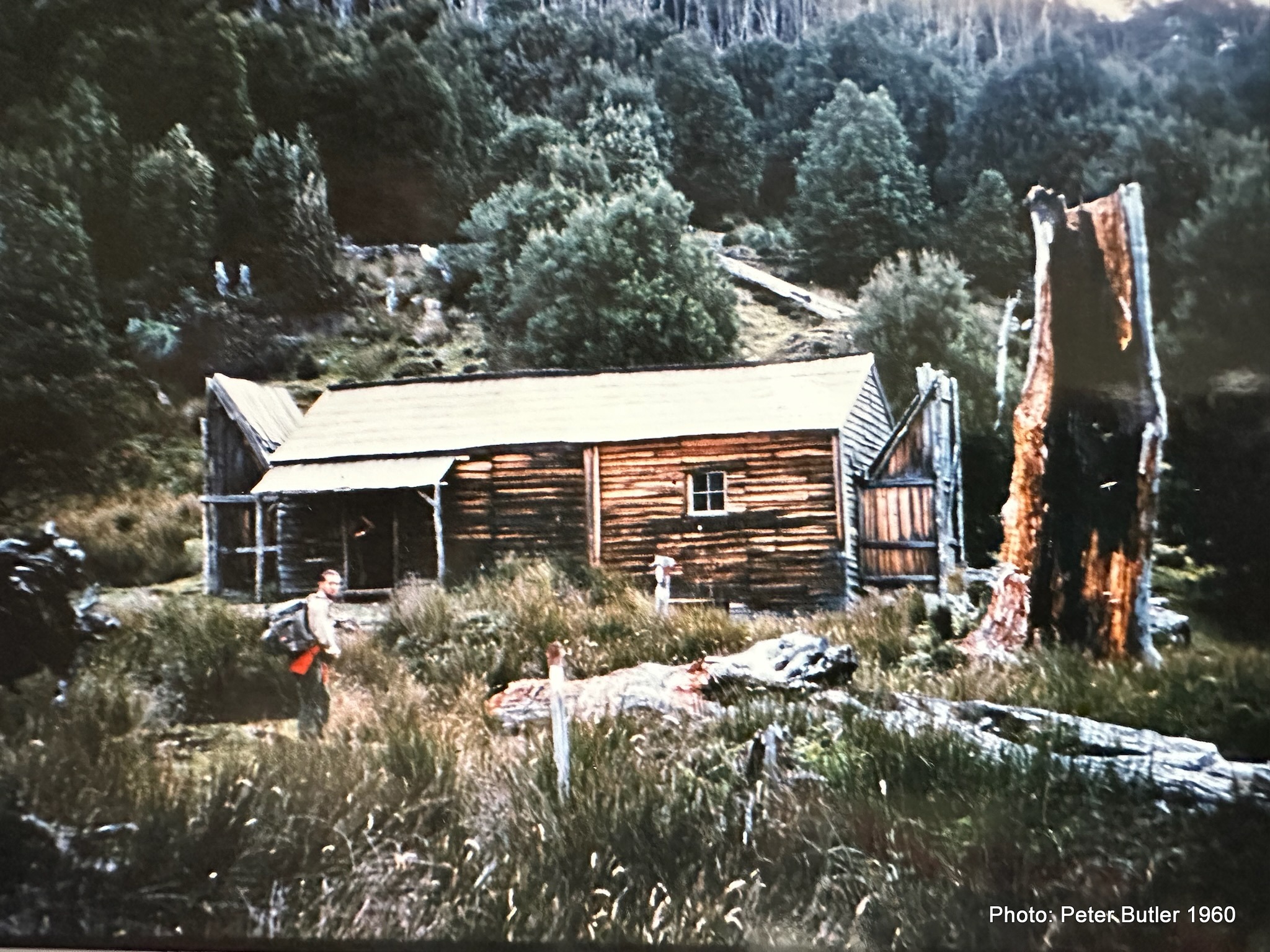
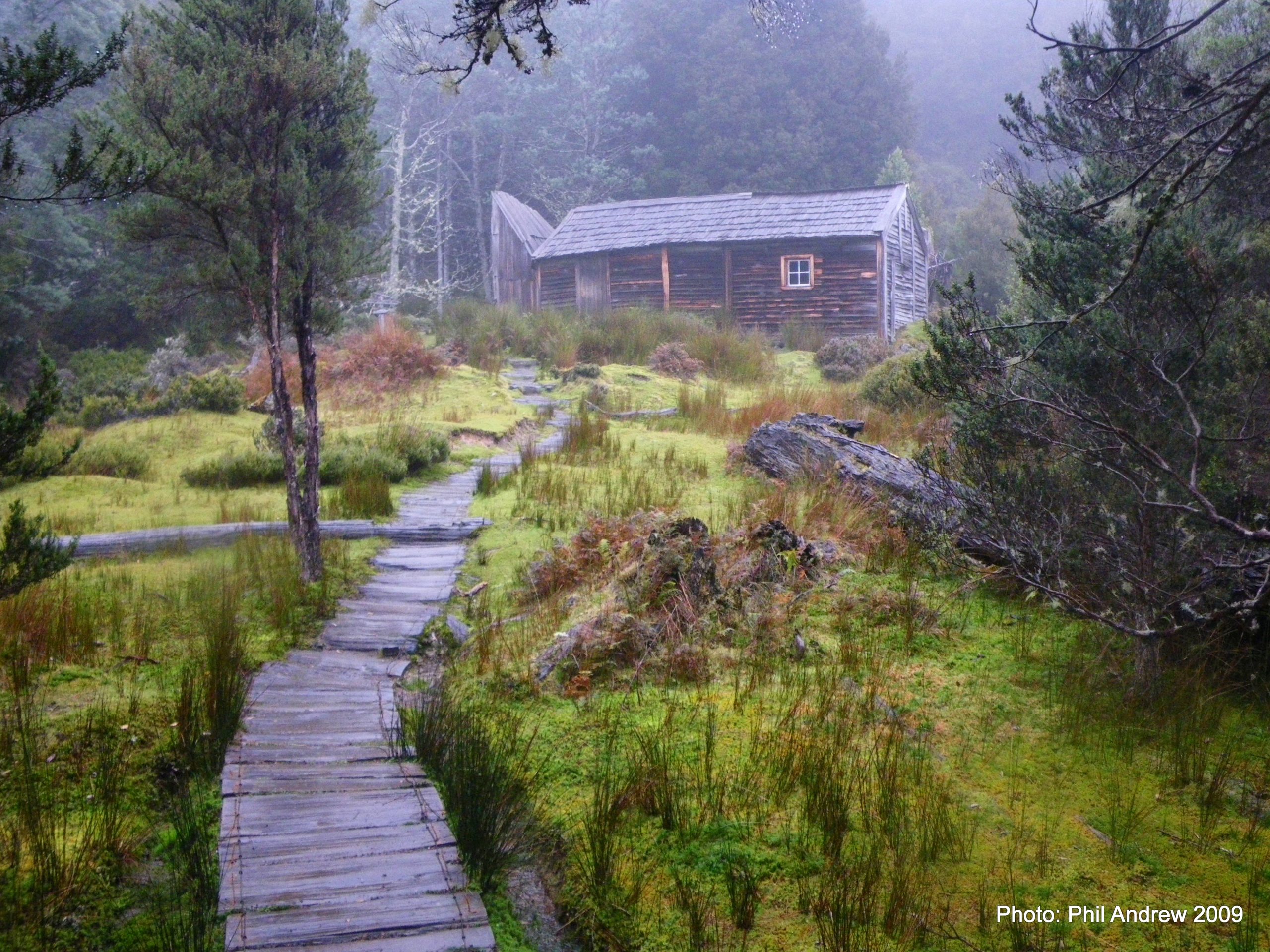
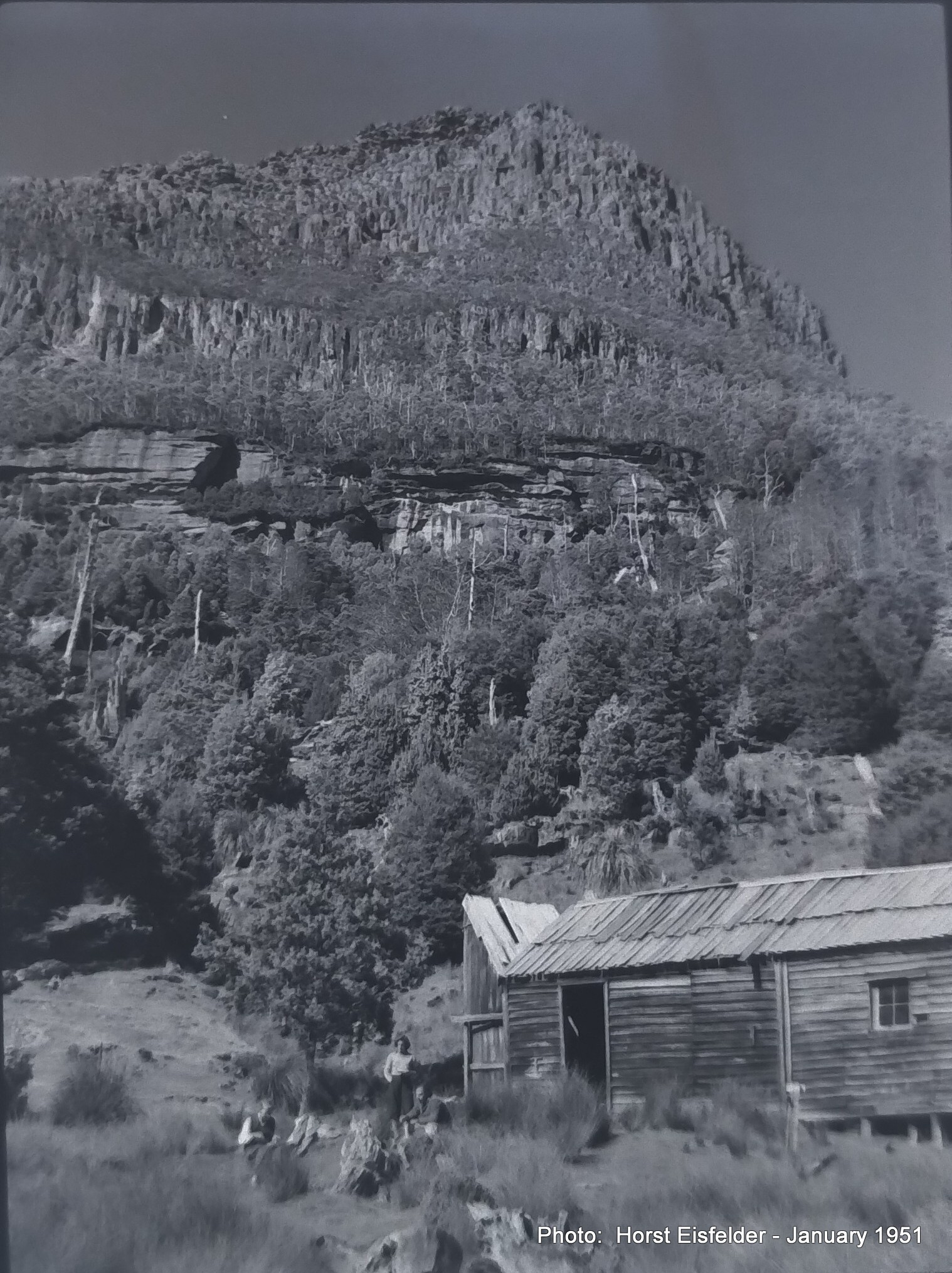
Du Cane Hut is the oldest structure on the Cradle Mt-Lake St Clair Overland Track. It was built in 1910 by Patrick Joseph ‘Paddy’ Hartnett. Paddy was born on 7th November 1875, one of 15 children, to parents Patrick and Mary and lived his early life at Quamby Brook, just outside the township of Deloraine. During his adult years, in addition to snaring and hunting, Hartnett was also a keen prospector and a successful pioneer tourist guide. Popular and well-liked, and known as the man in the black bowler hat, he was widely regarded by his peers as a talented bushman and skilled axeman.
Used as one of his highland bases for his tourism venture, Du Cane Hut was built almost entirely from hand split King Billy pine with the boards applied horizontally as opposed to the more conventional vertical slab construction of huts from that time. (Du Cane Hut was enlarged during the 1930s).
In 1915 at the age of 38, Hartnett married a Waratah lass, Lucy Hanson, who was 10 years his junior. Eight children were born into the family, and Lucy remained a faithful but long-suffering wife through many turbulent years of their marriage. Paddy Hartnett, for all his strengths, bush skills and pioneering business acumen, had one trait which was his undoing on many occasions – having discovered a liking for alcohol in his early twenties – he was an alcoholic. With his later life marred by strokes, alcoholic stupors, hospitalization, and repeat admissions to the New Town Infirmary, Paddy Hartnett passed away on 26th September 1944, succumbing to cancer just a few weeks shy of his 69th birthday.
Paddy Hartnett was a remarkable man in many ways, and his name is indelibly etched into Tasmanian mountain history. He is immortalized forever in the Tasmanian wilderness at places such as Paddys Nut, Hartnett Rivulet and Hartnett Falls. And of course, Du Cane Hut, now recorded on the Tasmanian Heritage Register, has become a monument associated with Hartnett as a forerunner to the modern-day wilderness lodge.
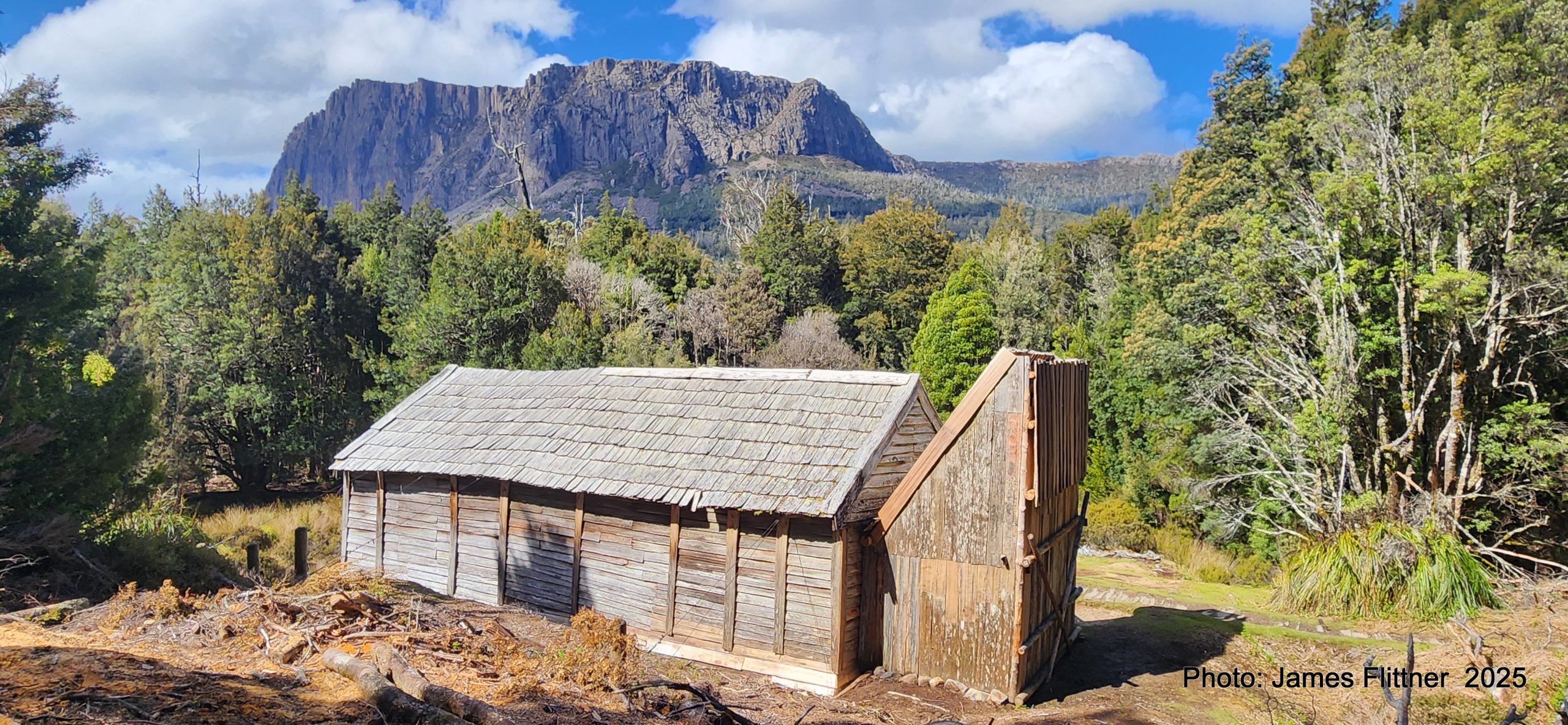
MHPS first became involved with conservation works on the Du Cane Hut over the 2011 Easter break when Society members, at the invitation of PWS, assisted with the completion of the vital task of replacing the four existing tension ties with upgraded and improved anchors. During May 2012, MHPS members again assisted with a scheduled works programme. The decayed northern wall stumps were replaced using King Billy pine stumps similar to the original foundations. The hut had developed a considerable lean, due to a combination of the rotten stumps and poor wall bracing. Rather than attempt to straighten the hut, it was decided to stabilise the foundations to halt any further movement. It was an interesting fact that the perimeter walls stood alone on their respective stumps and the floor bearers were not structurally attached to them. This possibly indicates that the shell of the building was erected initially and the floor was placed within the hut afterwards.
The most recent round of repairs occurred following a site visit in Oct. 2023 involving 2 MHPS members, a PWS ranger and the PWS Heritage Officer. MHPS was offered considerable input, and a detailed works plan was prepared by the Heritage Section of the PWS.
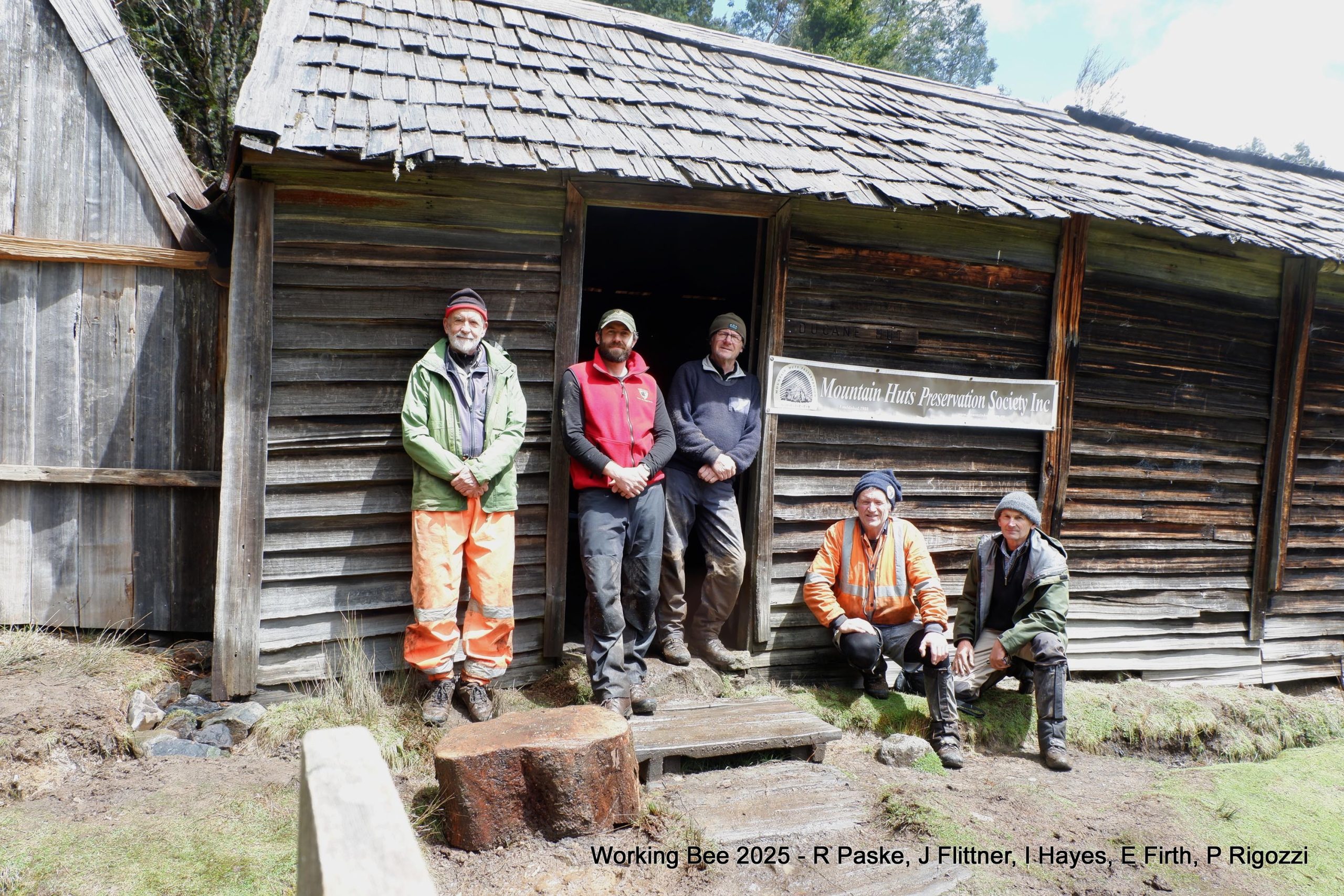
The plan, which was very detailed with stringent rules due to the hut now permanently entered in the Tasmanian Heritage Register, included the repair and make safe of floors in the Northern room and Southern room, and to rectify the slump in the hut corner closest the door as well as to stabilize the chimney structure. Long story short and 6 major working bees later the job was
completed with the final working bee in mid-November 2025. All up, a total of around 1200 hours of voluntary labour was accrued on-site with approximately a further 200 hours involved with the off-site preparation of materials and packing.
Each trip would involve 3 and sometimes 4 MHPS members camping at the Kia Ora tent platforms for an average of 5 days. A typical day would begin at 8am with a hike of around 40 minutes to the Du Cane site, work the day and aim to be back at camp around 6pm. During the various trips all types of weather were encountered – mostly very kind – however the last trip was a shocker with rain and snow for 3 of the days. Conditions for the daily commute varied from dust, good going, wet, muddy, icy slush and flooded track – very typical for the area.
An interesting sidenote about Du Cane Hut is that it has a permanent resident. A healthy tiger snake now calls it home and would appear most days which certainly kept members alert.
Part of the future work-plan flags the replacement of the roof within the next couple of years. MHPS would be very keen to be involved in this work which will involve many traditional skills.